Black Friday week

Black Friday week

📄 Digital book in PDF · read it on your phone or print it

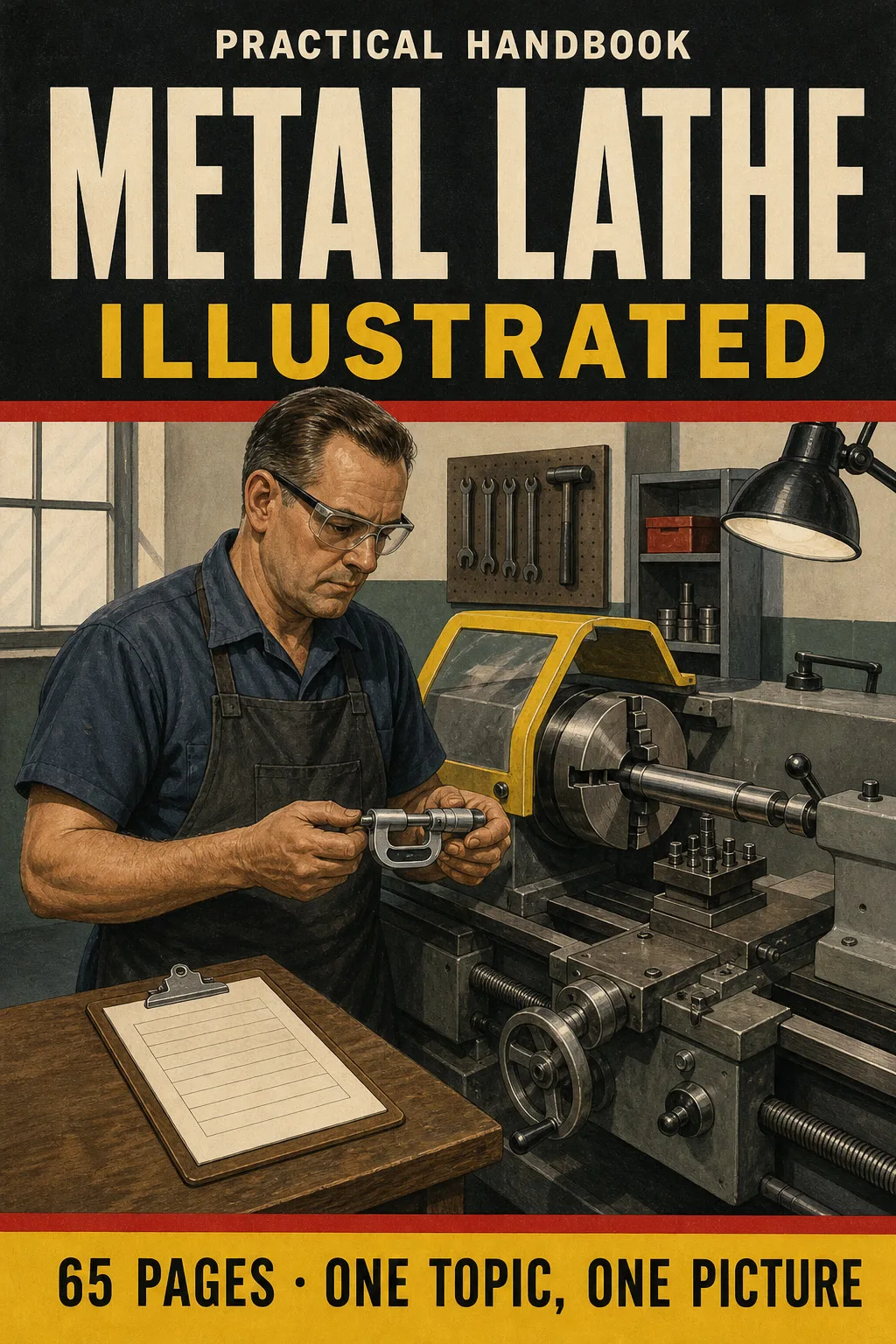
The Manual Engine Lathe, Fully Illustrated Turn to Size in the Same 4 Steps, Every Setup on Its Own Page

Center height, SFM to RPM, the dial math, the 4-jaw chuck, parting off, tapers, single-point threading and the micrometer. Each topic gets its own page: the drawing first, then what you need to remember. 65 illustrated pages.

YES, I WANT METAL LATHE ILLUSTRATED

🔒 Secure checkout · PDF by email · 30-day guarantee

Every topic, its own pageEvery setup drawn, with the explanation right beside it
65 illustrated pages9 parts, from the parts of the lathe to the most frequent mistakes
Up-to-date sourcesCurrent tool maker cutting data, ASME B1.1 and OSHA 29 CFR 1910.212
PDF by emailFormat

Look Inside the Book

Every page has one big drawing and a box with the numbers and steps you need at the machine:

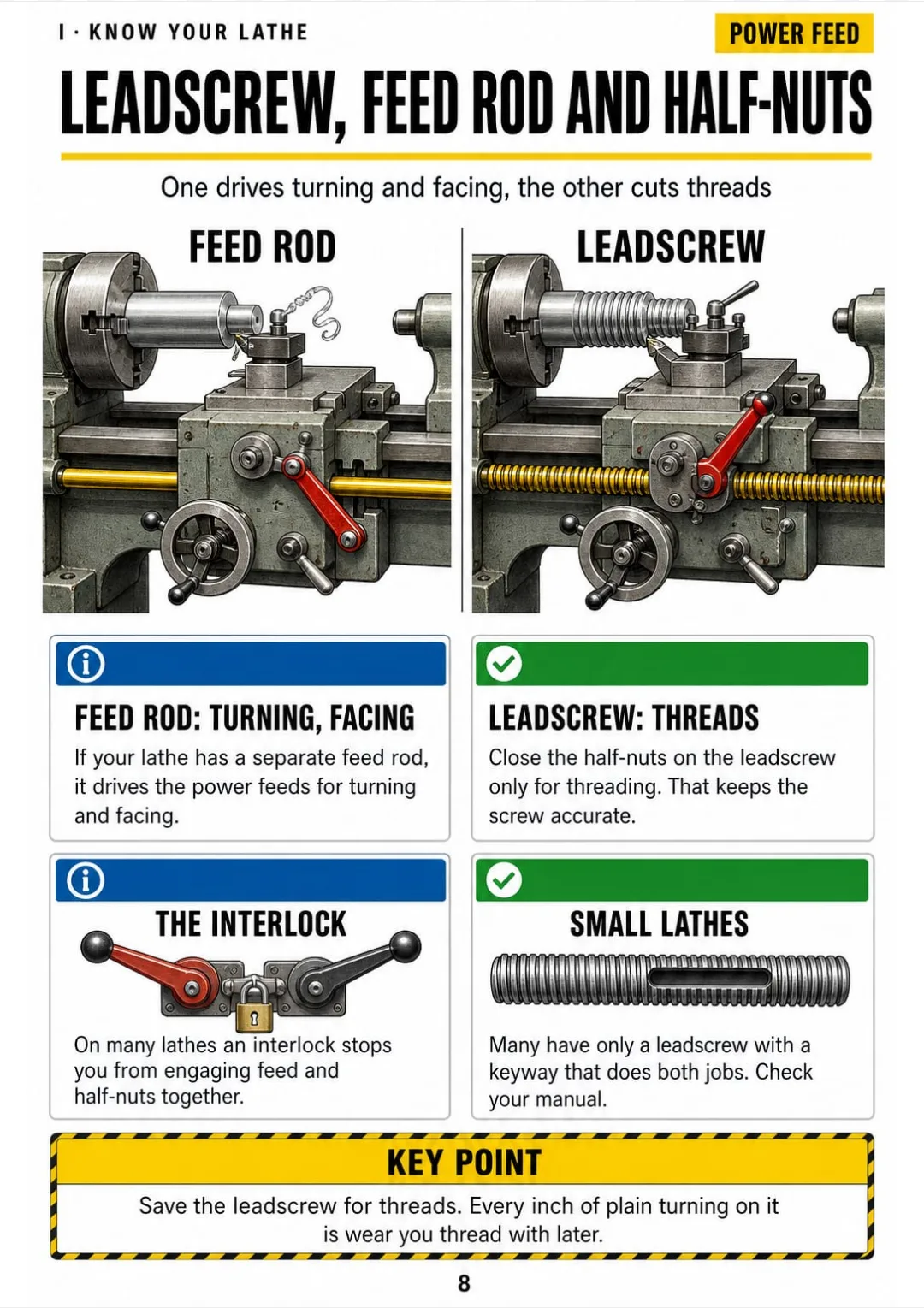
Feed rod for turning and facing; leadscrew and half-nuts for threading.
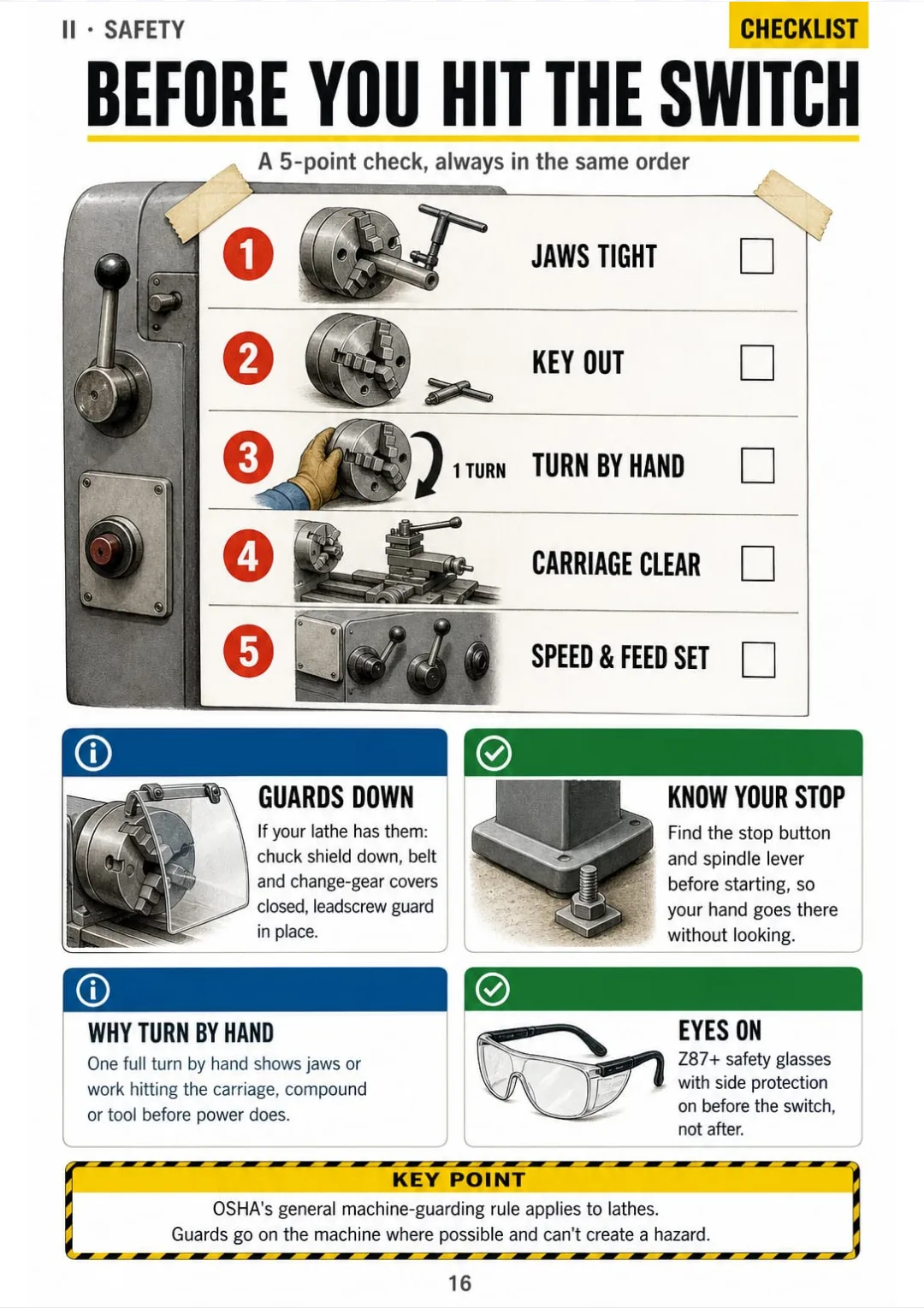
Jaws tight, key out, turn by hand, carriage clear, speed and feed set.
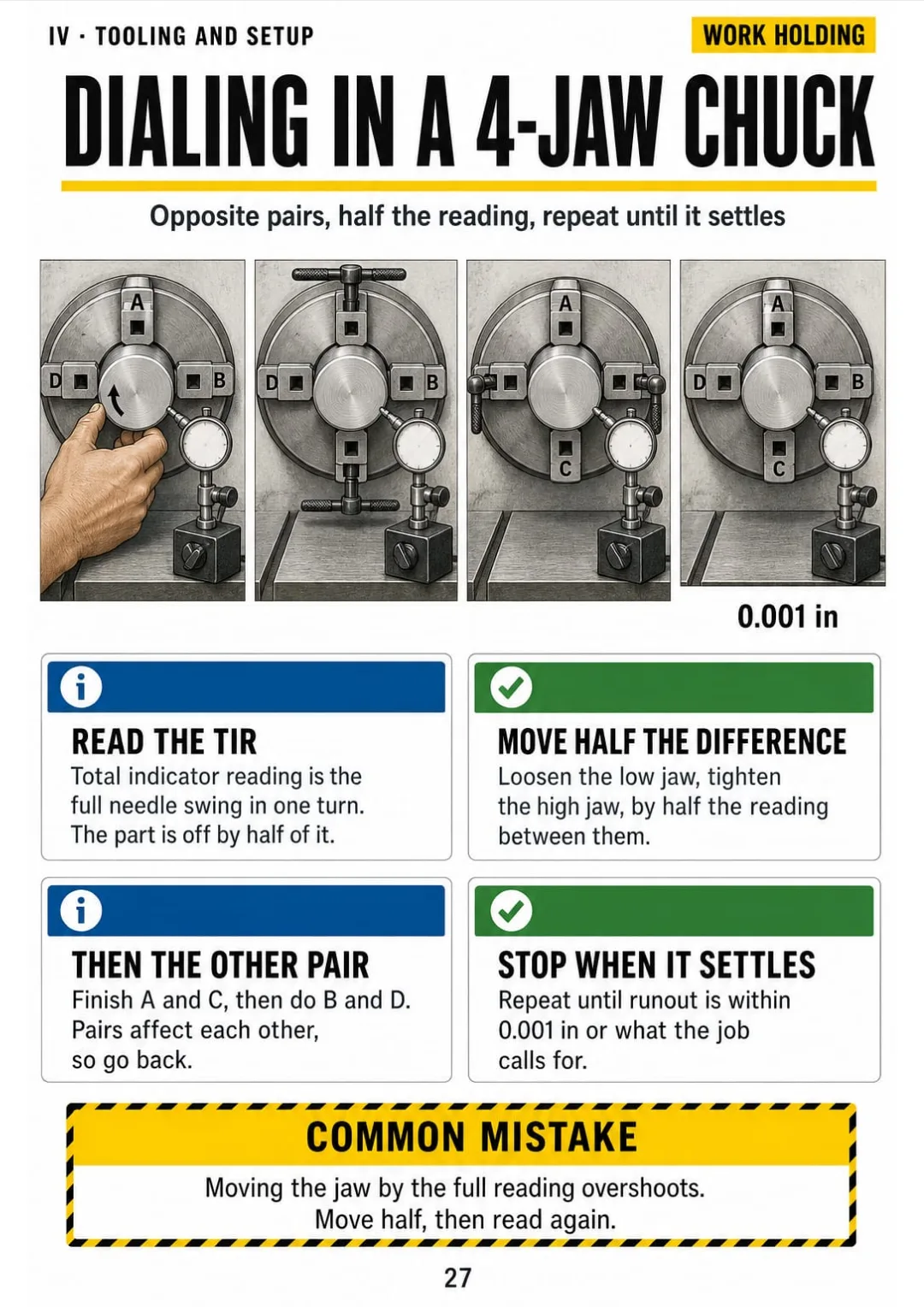
4-jaw chuck: opposite pairs, half the TIR, repeat to 0.001 in
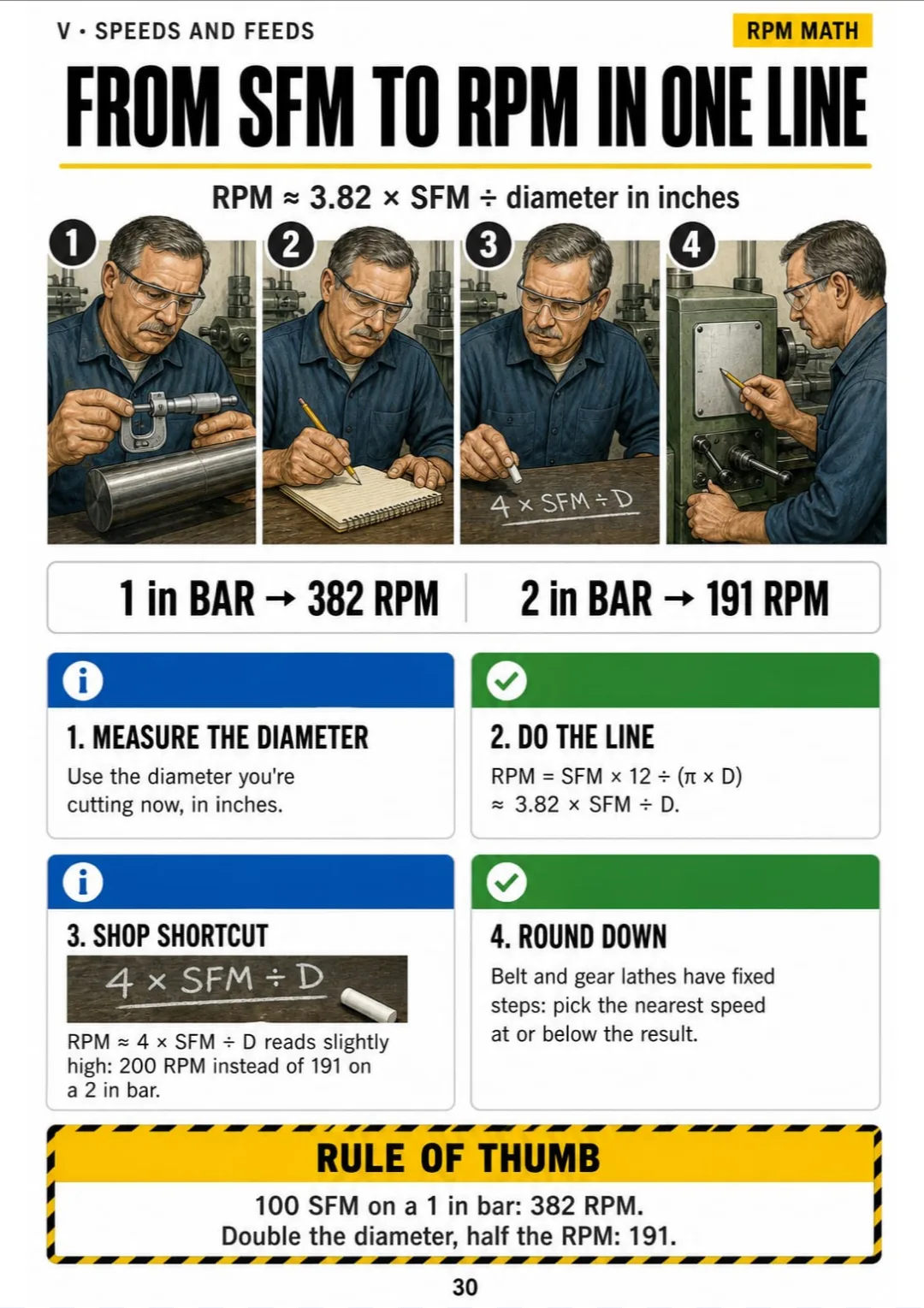
100 SFM: 382 RPM on a 1 in bar, 191 RPM on a 2 in bar.
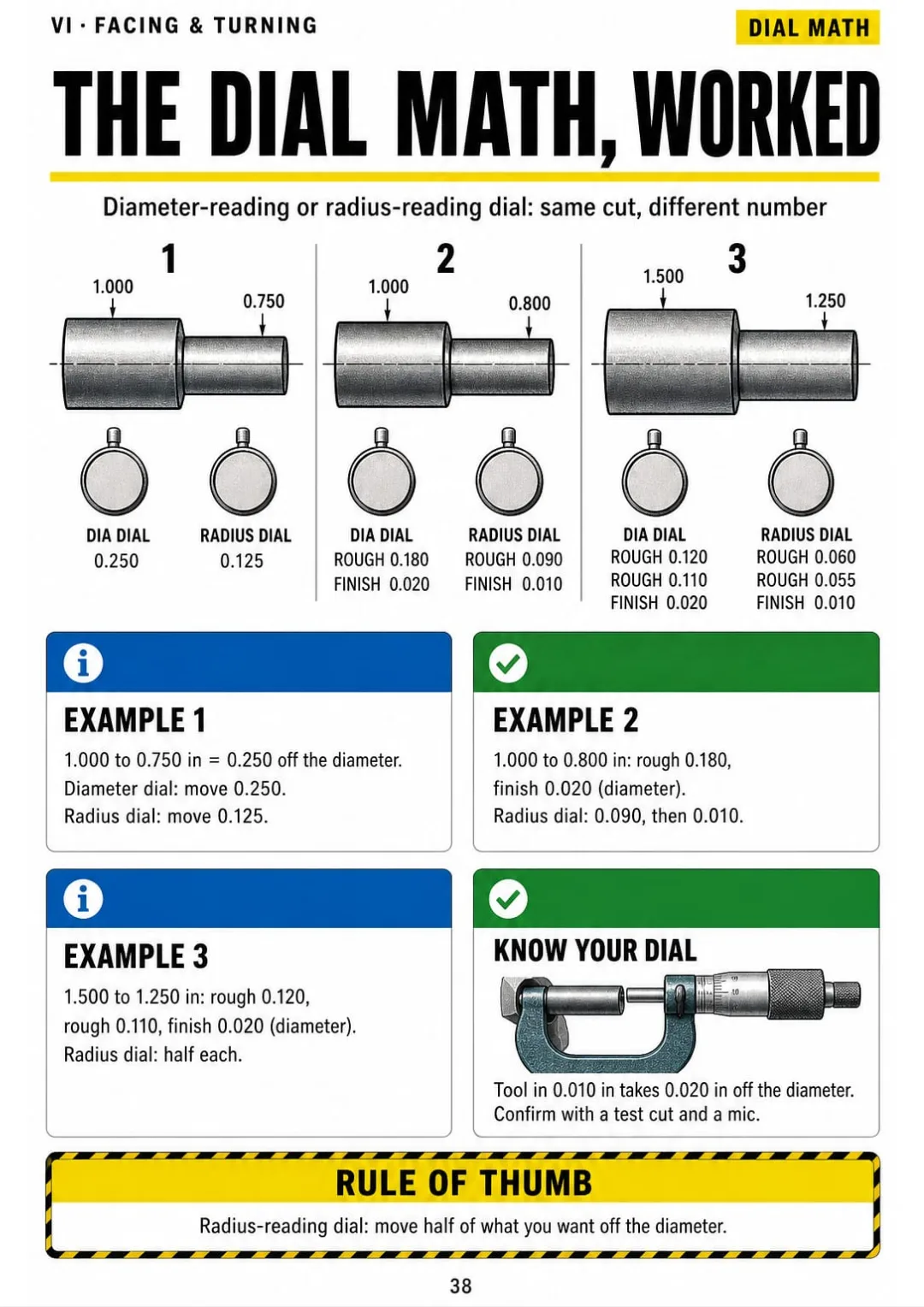
1.000 → 0.750 in: move 0.250 on a diameter dial, 0.125 on a radius dial
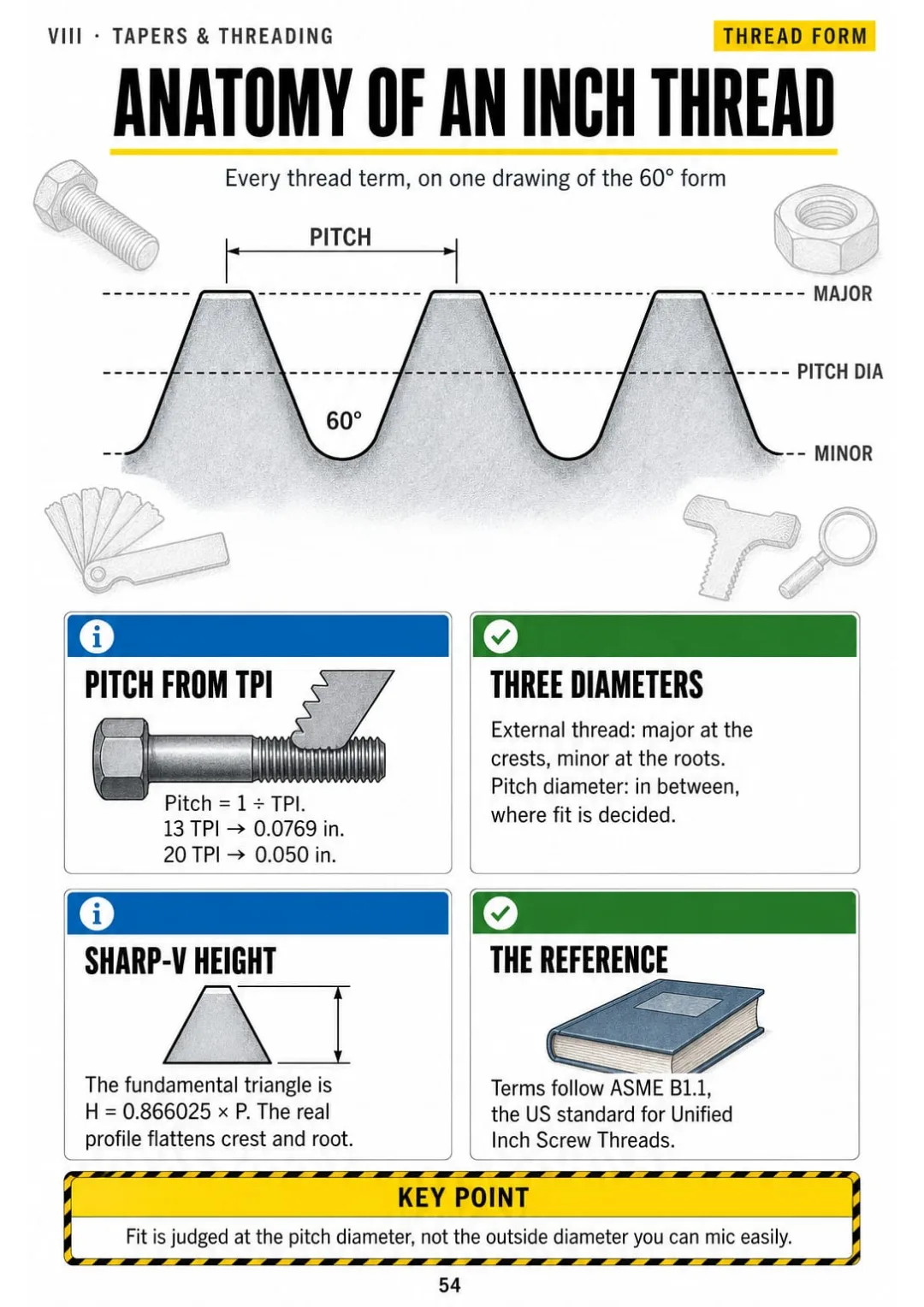
60° form, Pitch = 1 ÷ TPI: 13 TPI = 0.0769 in.
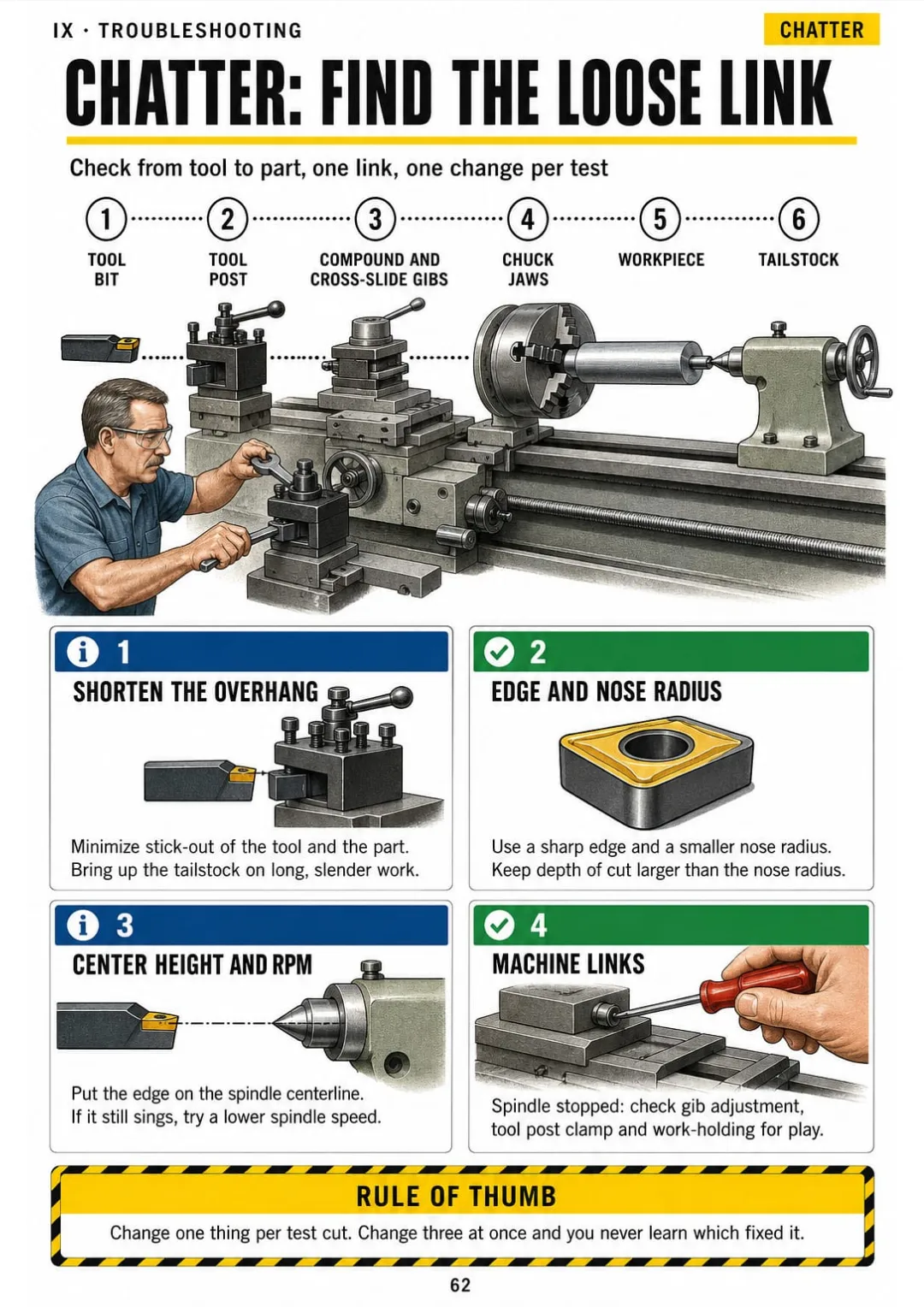
Short overhang, sharp edge, smaller nose radius: check the chain one link at a time.
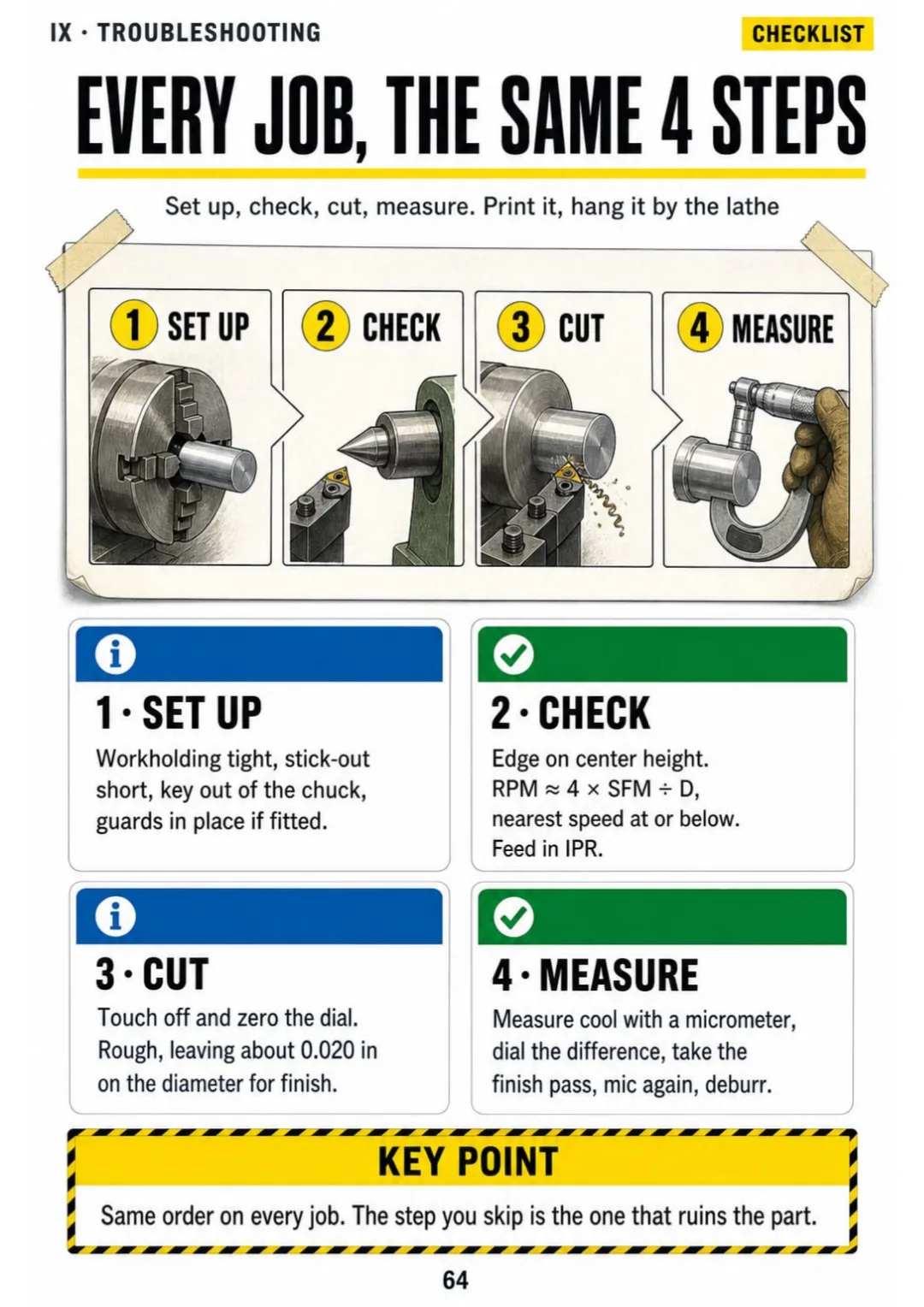
Set up, check, cut, measure: the whole job on one page by the lathe.

Swipe to see more →

These are real pages from the book. The table of contents is the full one: 9 parts and 61 topics.

The Problem Isn't You. It's How It Was Explained.

You're at the lathe with a square bar in the 4-jaw chuck and an indicator on the work, and the needle swings 0.012 every turn.

You loosen one jaw and tighten another, and it gets worse. The manual gives it three paragraphs about opposite jaws and total indicated runout, with no picture of which jaw to move first.

4-jaw chuck: opposite pairs, half the TIR, repeat to 0.001 in

In the book, the 4-jaw chuck is one page: the four jaws drawn as two opposite pairs, the indicator on top, and the rule in a box: take half the TIR, adjust, and repeat until it reads 0.001 in.

Every other job gets the same treatment: center height, SFM to RPM, the dial math, parting off, the thread dial. Each one on its own page.

You look at the drawing, set the part, and dial it in without going back to the manual.

COMPARE FOR YOURSELF

The Same Topic, Two Ways to Learn It

THIS
  • The manual: line after line
  • Pre-start checks explained only in words
  • You walk up to the lathe still unsure
Prior to energizing the spindle drive, the operator shall verify that the workpiece is adequately secured within the chuck jaws and that all jaw adjustment devices, including the chuck key, have been removed from the chuck body. The spindle should subsequently be rotated manually through at least one full revolution in order to confirm adequate clearance between the workpiece, the chuck jaws, the carriage, the compound rest and the tool post. Selected spindle speed and feed engagement shall likewise be confirmed as appropriate to the material, diameter and operation prior to start-up.
FOR THIS
  • The pre-start check in one drawing
  • The five checks in one box
  • You see it and you get it
Jaws tight, key out, turn by hand, carriage clear, speed and feed set.
CONTENTS

Take a Look at the 9 Parts and 61 Topics

Know your lathe, safety at the machine, measuring, tooling and setup, speeds and feeds, facing and turning, drilling and parting, tapers and threading, and troubleshooting: 65 pages, all illustrated

IKnow Your Lathe · pp. 5-11
  1. The Parts of an Engine Lathe
  2. What '12 x 36' Means
  3. Spindle Speeds: Belts and Gears
  4. Leadscrew, Feed Rod and Half-Nuts
  5. Your Dials: Diameter or Radius?
  6. Backlash: Always Approach From the Same Side
  7. Ways to Hold the Work
IISafety at the Machine · pp. 12-17
  1. The Chuck Key Rule
  2. Sleeves, Gloves, Rings and Hair
  3. Chips: Hook and Brush, Never Hands
  4. Stick-Out: When to Bring Up the Tailstock
  5. Before You Hit the Switch
  6. Filing and Polishing on the Lathe
IIIMeasure Without Second-Guessing · pp. 18-22
  1. Reading a 0–1 in Micrometer
  2. The Vernier Line: Reading Tenths
  3. Calipers: Fast, Not Final
  4. Dial Indicator and Runout
  5. Feel and Temperature
IVTooling and Setup · pp. 23-28
  1. HSS or Carbide?
  2. Tool Bit Angles, Named
  3. Center Height: The Setting That Fixes Half the Problems
  4. Lantern or Quick-Change Tool Post
  5. Dialing In a 4-Jaw Chuck
  6. Center Drilling From the Tailstock
VSpeeds and Feeds in Inches · pp. 29-35
  1. Surface Feet per Minute (SFM)
  2. From SFM to RPM in One Line
  3. Starting SFM by Material
  4. Feed in Inches per Revolution
  5. Depth of Cut: Rough, Then Finish
  6. Read the Chip
  7. Cutting Fluid: When and Which
VIFacing and Turning to Size · pp. 36-43
  1. Facing a Part Square
  2. Touch Off, Zero, Cut: The Turning Sequence
  3. The Dial Math, Worked
  4. Measure Before the Last Pass
  5. Turning to a Shoulder
  6. Is Your Lathe Turning a Taper?
  7. Finish: Nose Radius and Feed
  8. Holding Size Across a Batch
VIIDrilling, Boring, Parting and Knurling · pp. 44-50
  1. Drilling on the Lathe
  2. Boring a Hole to Size
  3. Reaming
  4. Parting Off Without Drama
  5. When the Parting Tool Chatters
  6. Knurling
  7. Chamfers and Deburring
VIIITapers and Single-Point Threading · pp. 51-60
  1. Taper Terms: TPF and Included Angle
  2. Short Tapers With the Compound
  3. Long Tapers With the Tailstock Offset
  4. Anatomy of a Unified Inch Thread
  5. UNC, UNF and Thread Classes
  6. Setting the Gearbox to Your TPI
  7. The Compound at 29.5°
  8. The Thread Dial: Staying in the Same Groove
  9. One Threading Pass, Step by Step
  10. Checking the Thread Fit
IXTroubleshooting and Review · pp. 61-65
  1. The Part Came Out Small
  2. Chatter: Find the Loose Link
  3. Rough Finish or Torn Surface
  4. Every Job, the Same 4 Steps
  5. The Most Frequent Lathe Mistakes

One Page, One Topic, All Clear

Think of it this way:

You need to bring a 1.000 in shaft down to 0.750, and the cross-slide dial is all that stands between you and a scrapped part.

You open the dial math page and it's drawn: 1.000 to 0.750, move 0.250 on a diameter dial, 0.125 on a radius dial, and where to stop and measure before the last pass.

1.000 → 0.750 in: move 0.250 on a diameter dial, 0.125 on a radius dial

Same with center height, SFM to RPM, parting off, the compound at 29.5° and the thread dial: each one on its own page.

Metal Lathe Illustrated is 9 parts and 61 topics, all drawn, and it ends with every job in the same 4 steps on one page and the most frequent mistakes, each with the page that fixes it.

What you see drawn, you don't have to memorize.

What's Inside Metal Lathe Illustrated:

Ipp. 5-11

Know Your Lathe

The parts of an engine lathe, what '12 x 36' means, belts and gears, leadscrew and half-nuts, diameter or radius dials, backlash and ways to hold the work

IIpp. 12-17

Safety at the Machine

The chuck key rule, sleeves, gloves and rings, chips with a hook, stick-out and the tailstock, the pre-start check and filing on the lathe

IIIpp. 18-22

Measure Without Second-Guessing

Reading a 0–1 in micrometer, the vernier line for tenths, calipers, the dial indicator and runout, feel and temperature

IVpp. 23-28

Tooling and Setup

HSS or carbide, tool bit angles named, center height, lantern or quick-change tool post, dialing in a 4-jaw chuck and center drilling

Vpp. 29-35

Speeds and Feeds in Inches

Pick the RPM instead of guessing: SFM, from SFM to RPM in one line, starting SFM by material, feed in inches per revolution, depth of cut, reading the chip and cutting fluid

VIpp. 36-43

Facing and Turning to Size

Hit the size on the print: facing square, the touch off, zero, cut sequence, the dial math worked, measuring before the last pass, shoulders, taper, finish and holding size across a batch

VIIpp. 44-50

Drilling, Boring, Parting and Knurling

Drilling, boring to size, reaming, parting off, parting tool chatter, knurling, chamfers and deburring

VIIIpp. 51-60

Tapers and Single-Point Threading

TPF and included angle, short and long tapers, the anatomy of a Unified inch thread, UNC, UNF and classes, gearbox to TPI, the compound at 29.5°, the thread dial, one pass step by step and checking the fit

IXpp. 61-65

Troubleshooting and Review

The part that came out small, chatter, a rough or torn finish, every job in the same 4 steps and the most frequent lathe mistakes

At the end of the book: Every job in the same 4 steps on one page, plus the most frequent mistakes with the page that fixes each.

Plus: 2 Free Books

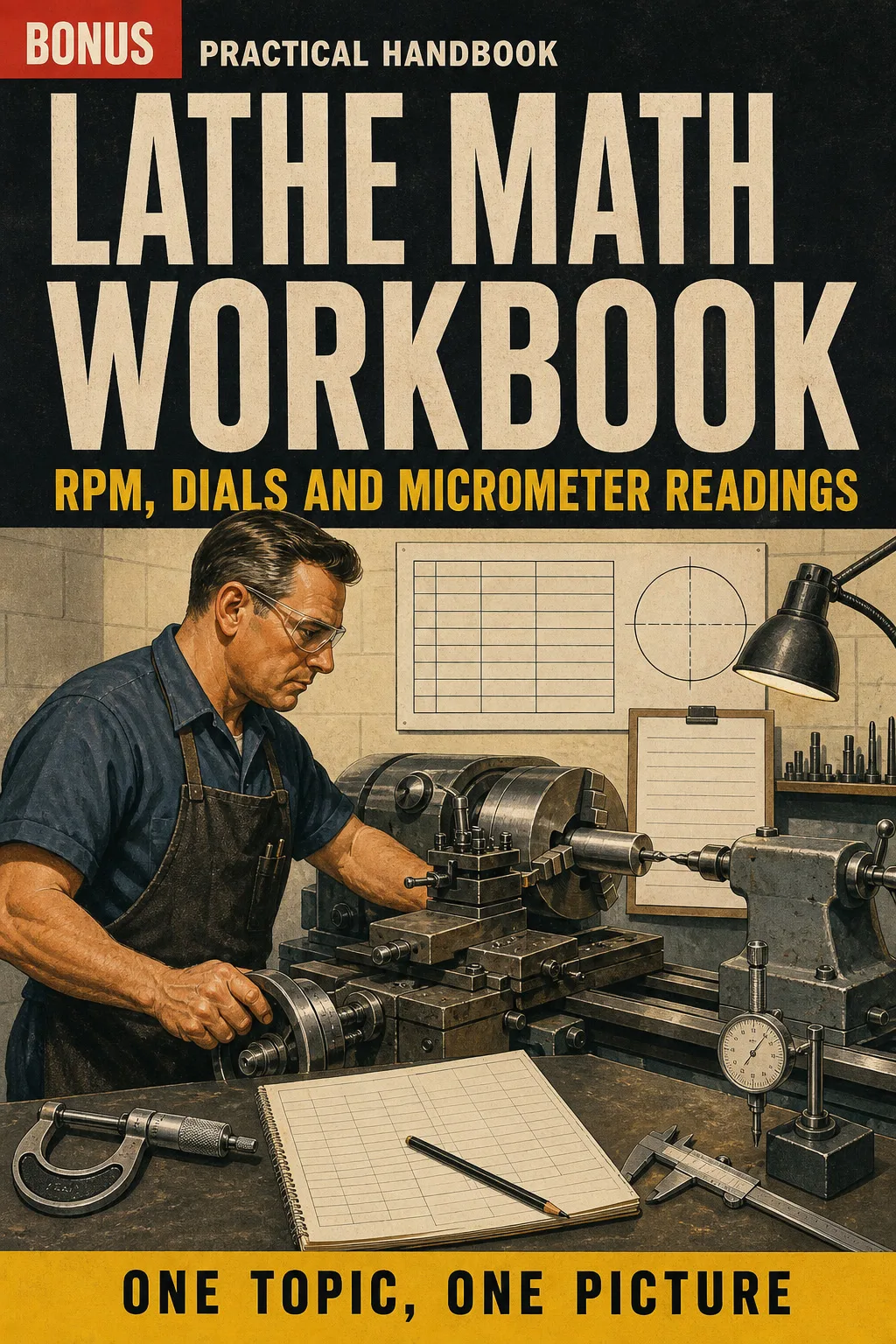
Lathe Math Workbook: RPM, Dials and Micrometer Readings

BONUS 1: «Lathe Math Workbook: RPM, Dials and Micrometer Readings»

Value on its own: US$ 17.90

Practice the numbers you use at the machine, from SFM to RPM, dial moves and micrometer readings, with every answer worked out so you can check yourself.

Lathe Troubleshooting Cards: Symptom, Cause, Fix

BONUS 2: «Lathe Troubleshooting Cards: Symptom, Cause, Fix»

Value on its own: US$ 14.90

Chatter, taper, a rough finish or a part that comes out small: find the symptom on one card and see the usual causes and what to check first.

Black Friday week · ends Nov 30

Metal Lathe Illustrated with 2 Free Books

  • Metal Lathe Illustrated: 65 illustrated pagesUS$ 63
  • BONUS 1: Lathe Math Workbook: RPM, Dials and Micrometer ReadingsUS$ 17.90
  • BONUS 2: Lathe Troubleshooting Cards: Symptom, Cause, FixUS$ 14.90
  • High-resolution PDF to printIncluded
Total value US$ 95.80
BLACK FRIDAY PRICE:
US$ 27
You save US$ 68.80
YES, I WANT METAL LATHE ILLUSTRATED FOR US$ 27

📄 This is a digital PDF book sent to your email: nothing is printed or shipped.

Secure purchaseEncrypted payment30-day guarantee

PDF by email: We email you Metal Lathe Illustrated as a PDF, together with the two free books. It's a single payment: no installments, no extra charges.

Who This Book Is For

You're learning on your own lathe

You're learning on your own lathe

You bought a used lathe for the garage. Each job is on its own page, in inches, so you can print it and keep it next to the machine.

You're new on the shop floor

You're new on the shop floor

You came to the trade later and work next to an experienced machinist. Every setup goes in the same order, so you're not guessing in front of him.

You keep a plant running

You keep a plant running

You're the maintenance mechanic who gets the shaft or bushing to turn. Every few months you open the page, check the steps and cut to size.

Everything You Get Today

US$ 95.80US$ 27
YES, I WANT METAL LATHE ILLUSTRATED FOR US$ 27

📄 This is a digital PDF book sent to your email: nothing is printed or shipped.

30DAYS
GUARANTEE

30-Day Guarantee

Try Metal Lathe Illustrated for 30 days, bonus books included.

We refund everything if the file won't open, if the book isn't what you see here, if you were charged twice or if the email doesn't arrive. Just email us.

You pay once. No subscriptions.

Frequently Asked Questions

Is it for me if I already run a lathe but learned it from videos?

Yes. It's written for manual engine lathes in inches, from small bench lathes to full-size shop lathes, and it puts every job in one fixed order. It starts with the parts of the lathe, but most of the book is the work itself: dialing in a 4-jaw chuck, parting tool chatter, the compound at 29.5°, the thread dial and troubleshooting a part that came out small. It covers manual lathes only, not CNC.

Where does the content come from?

Cutting speeds and feeds are checked against current tool maker data, thread forms against ASME B1.1, and safety habits against OSHA 29 CFR 1910.212 and ANSI/ISEA Z87.1.

Is this official material?

No. It's an independent illustrated book. It isn't endorsed by any standards body, agency or lathe maker.

Does it replace a machining course or shop training?

No. It's a book to keep by the machine and look things up in. It doesn't replace hands-on training, an experienced machinist, your lathe's manual or your shop's safety rules.

Are the practice problems from a test or certification?

No. The problems in the workbook were written for this book, and every answer is worked out so you can check your own numbers.

When and how do I get it?

The book and the 2 bonus books come as a PDF by email, sent to the address you enter at checkout.

Do I have to pay every month?

No. You pay once and there's no subscription.

Can I have it on paper?

Yes. It's a PDF you can print at home or at a print shop, so you can keep the pages in the shop.

How does the refund work?

You have 30 days. We refund everything if the file won't open, if the book isn't what you see on this page, if you were charged twice or if the email doesn't arrive: just email us.

Before You Close This Page

No more rewatching videos that each say something different.

The 4-jaw chuck and the dial math are drawn out for you.

You walk up to the lathe knowing where every step is.

Drawings make studying faster.

The book is right below.

One-time payment: US$ 27 · Guarantee: 30 days · PDF by email

YES, I WANT METAL LATHE ILLUSTRATED FOR US$ 27

📄 This is a digital PDF book sent to your email: nothing is printed or shipped.